

By Sheila Maxey and Jenny Mayo
A number of years ago, with the support of the minister and elders of Brentwood URC, two of us started a twice-monthly time of prayer called ‘Sacred Space’. During its long gestation period, certain features which would characterise this prayer time emerged:
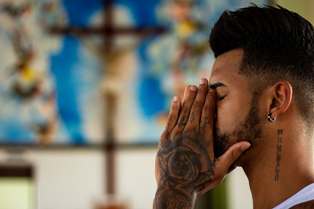
- its length would be clearly defined; 45 minutes
- it would mostly be silent, with quiet Taizé music for half the time and complete silence for the rest
- the opening and closing liturgies would be brief, not in traditional language and always the same, apart from the Gospel reading (with perhaps a brief reflection) and the Psalm for the coming Sunday
- there would be various prayer stations around the church so that we could physically move from thanksgiving to confession, to intercession etc.
- there would be no refreshments or discussion.
Things progressed from there...
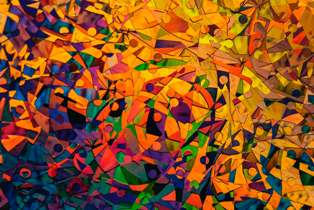 Years ago I learned from the Schyler Institute of Worship and Arts that there are four active languages in worship – aural (what we hear), visual (what we see), kinaesthetic (how we move) and verbal (the words we use). I like to think of God’s languages this way and enjoy affirming that visual language is one way of God speaking to us. It makes sense when we think of messages we receive from someone’s facial expression or body movement, of learning we receive when we see particular objects or buildings, of emotions we feel when seeing particular colours. To pray with art is to pray with expectation that what we see will give us new insight, a new experience, and a deeper relationship with God.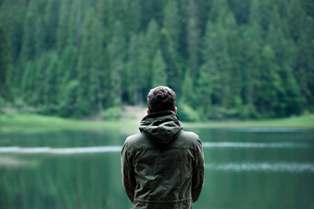
 ‘As a deer longs for streams of water, so I long for you, O God! I thirst for God, for the living God. I say, “When will I be able to go and appear in God’s presence?”’ Psalm 42: 1&2 (NIV)
 One declaration I rarely hear used in URC circles is ‘Let’s have a week of guided prayer’. We sometimes talk about quiet days and either individual or group retreats, but structured time, set aside for guided prayer don’t figure so prominently in our spiritual conversations.

